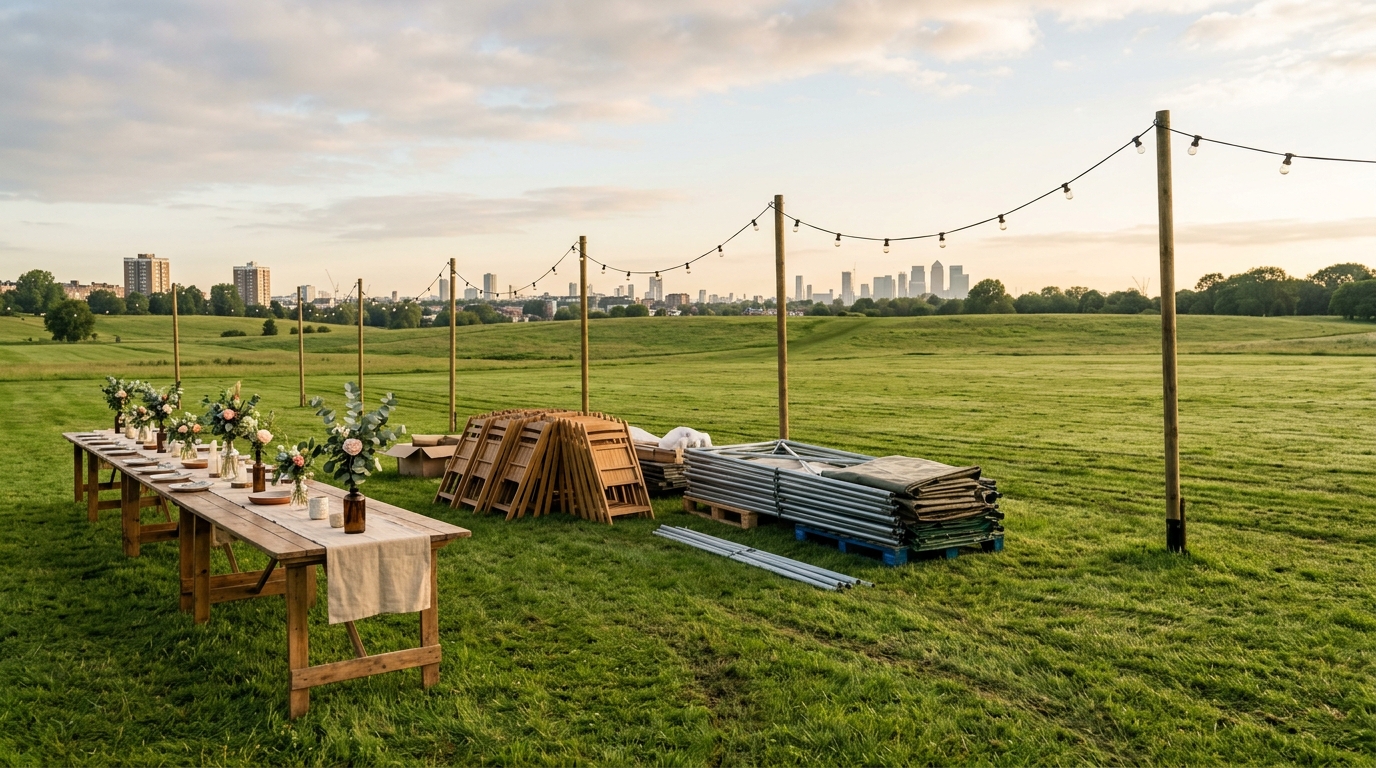
How far ahead should you start planning an outdoor event? For a big wedding or Walima, give yourself nine to twelve months where you can; for a smaller party, a few months is often enough. The single most important step is the same either way: lock the venue and the date first, then build everything else around them. At The Outfields, that starts with one enquiry and a reply within 24 hours.
An outdoor event has a reputation for being complicated. It is not, once you see it as a sequence rather than a pile of decisions all due at once. Here is a clear timeline from your first message to the moment the festoon lights come on, with honest notes on what to do when, and what your coordinator handles so you do not have to.
At a glance
- Book the venue and date first. Everything else, caterer, décor, guest list, follows from it.
- Nine to twelve months is comfortable for a large wedding; smaller parties need far less.
- Dry hire means a clear order of jobs: caterer, then suppliers, then the fine detail.
- An on-site coordinator maps the day with you, so the timeline never lives only in your head.
Step one: enquire and hold the date
Everything begins here, and it is simpler than couples fear. Send us your preferred date and a rough guest count, and we reply within 24 hours with availability. Popular Saturdays in summer go first, so if you have a date in mind, this is the step not to sit on. A held date turns a vague idea into a real plan, and it stops you spending months falling for a caterer or a theme before you know the day is even possible.
Book the field and the date first. A locked venue turns a hundred loose worries into one clear plan.
Step two: the big building blocks
With the date held, you sort the decisions that shape the whole day. These are the ones worth doing early, because everything smaller hangs off them.
The early, load-bearing decisions
- Your caterer. Because The Outfields is dry hire, this is yours to choose, including your trusted halal caterer. Book them early; the good ones get reserved well ahead for peak dates.
- Your guest count. A realistic number drives the layout, the catering quantities and the supplier brief. It does not need to be final, but a working figure unlocks everything else.
- The shape of the day. A ceremony then a seated meal then dancing, or a Nikah in the afternoon and a Walima as the lights come on. Decide the rough running order so suppliers can plan around it.
- Your covered backup. A marquee through our suppliers or the indoor space for 70. Deciding this early is what lets you stop worrying about the weather for good.
Step three: the suppliers and the styling
Now the day starts to look like itself. With the caterer and layout settled, you bring in the florist, the lighting, the furniture and the décor that make a blank field yours. You can use our approved supplier network or bring your own; either way, share the running order with each supplier so set-up on the day runs to time. This is the stretch where Pinterest boards become real choices: long tables or round, festoon lights or fairy lights, your colours, your flowers.
A coordinator’s reminder: book the people before the props. A caterer, a florist and a lighting supplier are far harder to secure than table linen or signage, especially for a summer Saturday. Lock the human suppliers early and leave the small, swappable details for later, when you have headspace to enjoy choosing them.
Step four: the final weeks and the day itself
In the last month, the plan moves from decisions to logistics. Confirm final numbers with your caterer, share the timeline and a site plan with every supplier, and walk through the layout with your coordinator. Then, on the day, your job is to be present while the team sets the field, runs the schedule and handles the moving parts.
That on-site coordinator is the quiet difference between an outdoor event that feels stressful and one that feels effortless. They hold the timeline, brief the suppliers and keep the day on track, so you and your family can actually be guests at your own celebration.
A rough timeline you can borrow
Every event is different, but the shape of the run-up is remarkably consistent. Treat the months below as a loose map rather than a rulebook, and adjust for how big and how soon your day is.
From “we should do this” to the big day
- 9 to 12 months out (large weddings). Hold the venue and date, book your caterer, and settle a working guest count. These are the decisions everything else depends on.
- 6 to 9 months out. Lock the suppliers that are hardest to replace: florist, lighting, photographer, and any cultural specialists. Send save-the-dates so guests can plan travel.
- 3 to 6 months out. Confirm the layout and running order with your coordinator, choose your décor and styling, and decide your covered backup.
- 1 to 3 months out. Send invitations, gather RSVPs, and firm up numbers so the caterer and furniture hire can finalise quantities.
- The final fortnight. Confirm final headcount, share the timeline and a site plan with every supplier, and walk the layout one last time.
- The day. Arrive as a guest, not a project manager. Your coordinator runs the schedule and briefs the suppliers.
Why outdoor events are not harder, just different
The reputation outdoor weddings carry for being complicated comes from one thing: a hall arrives with its furniture, its kitchen and its staff already in place, so the venue hides half the timeline from you. A field shows you the whole picture. That can feel like more to manage, but it is really just more visible, and visibility is what lets you control the day rather than inherit someone else’s version of it.
The two questions that genuinely need answering early are power and cover. An open field needs a plan for electricity for the lighting, the band and the caterer, which your suppliers and coordinator sort between them, and a plan for shelter if the weather turns. Decide both at the building-blocks stage and the rest of the timeline runs much like any other event: book the big things, add the detail, confirm the logistics, enjoy the day. None of it is harder than a hall. It is simply yours to shape.
What slips when couples leave it late
Most timeline regrets come from the same root: waiting to feel “ready” before holding the date. Readiness rarely arrives, but the popular Saturdays do book up, and the best caterers and suppliers fill their calendars months ahead. Couples who move early are not the most organised people in the world; they simply made the one decision that unlocks calm, and locked the venue and date before chasing everything else.
The other quiet trap is leaving the practical, unglamorous decisions, power, cover, the running order, until the styling is done. It feels natural to start with the fun parts, the flowers and the colour scheme, but those are the easiest things to change late. The load-bearing logistics are not. Sort the boring brilliance early, and you buy yourself months to enjoy the pretty decisions without a deadline breathing down your neck.
If you take one thing from this guide, take this: the timeline is not a source of stress, it is the cure for it. A held date and a clear order of jobs turn a hundred floating worries into a short, calm list. Everything after that is just working through it, one decision at a time, with a coordinator who has done it many times before.
If you are still weighing the practicalities, our guide to choosing suppliers for a dry-hire venue covers who to book and when, and the outdoor wedding venue guide sets out how the field works overall.
Ready to start the clock?
Step one is the easy one. Send us your date and a rough guest count and we’ll reply within 24 hours with availability, and map the rest of the timeline with you from there.
Frequently asked questions
How far in advance should I book a wedding venue?
For a large wedding or Walima, nine to twelve months is comfortable, as popular summer Saturdays book early. Smaller parties often need only a few months. The key step is to hold your venue and date first, then plan everything else around them.
What should I book first when planning an outdoor event?
Book the venue and date, then your caterer, before anything else. Both get reserved early for peak dates, and almost every other decision, from layout to quantities, depends on them.
What’s the order of planning for a dry-hire venue?
Hold the venue and date, settle your guest count and caterer and the shape of the day, then add the florist, lighting, furniture and décor, and finally confirm logistics in the last few weeks. Your coordinator helps map it.
How quickly does The Outfields respond to an enquiry?
We reply within 24 hours with availability. Send your preferred date and a rough guest count to get started.
Do I get help planning the day?
Yes. An on-site coordinator works through the layout and running order with you and is there on the day to brief suppliers and keep the schedule on track.
The Outfields, an open-air event venue at Valentines Park, Ilford. Weddings, Nikah & Walima, Eid and cultural celebrations under the open sky.